
Beautiful Latvia Awaits IMCL Participants in Especially Timely 63rd Conference on Livable Cities
Updated: May 28
Urgent topics will include affordability, walkability and bikability, health and well-being, zoning code reform, financial tools and strategies, AI in planning and design, and much more
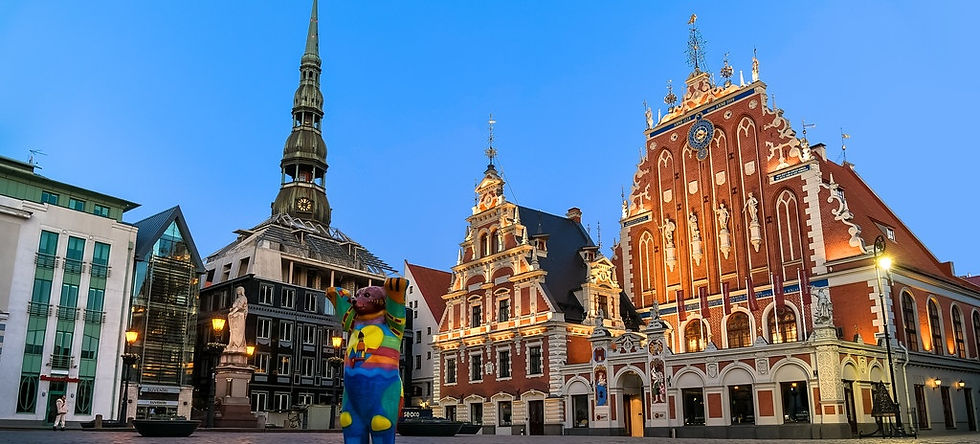
ABOVE: The House of the Blackheads, site of the opening reception of the 63rd IMCL conference. (Photo: Jorge Franganillo via Flickr.)
RIGA AND JELGAVA, LATVIA – Organizers of the International Making Cities Livable (IMCL) conference series are here to make final preparations for the next conference in the venerable series — this will be the 63rd — taking place this coming July 6-10. Executive director Michael Mehaffy and board member Jim Brainard are meeting with local hosts to tour the venues, arrange catering, confirm technical facilities, and make other preparations.

Mehaffy reports firsthand that flights and other logistics are operating smoothly and affordably. “This is a fantastic opportunity for incomparable professional education and growth - sharing the best lessons with city leaders from around the world, and here in Europe,” he says. “Our hosts could not be more gracious, and the two venues, in Riga and Jelgava, could not be more beautiful. In addition to the important work, we’re all in for a real treat!”
Mehaffy notes that Europeans have long been leaders in making cities livable, and at this historical moment, they are stepping into an even more prominent global leadership role. “It’s a very poignant moment to be here in Europe, and to learn and share the best lessons with our European friends and allies,” he says.
Partners in the conference will include The King’s Foundation, King Charles’ livable cities think tank, as well as UN-Habitat, HealthBridge Canada, the International Network for Traditional Building, Architecture and Urbanism (INTBAU), and other global leaders in livable city planning and development.
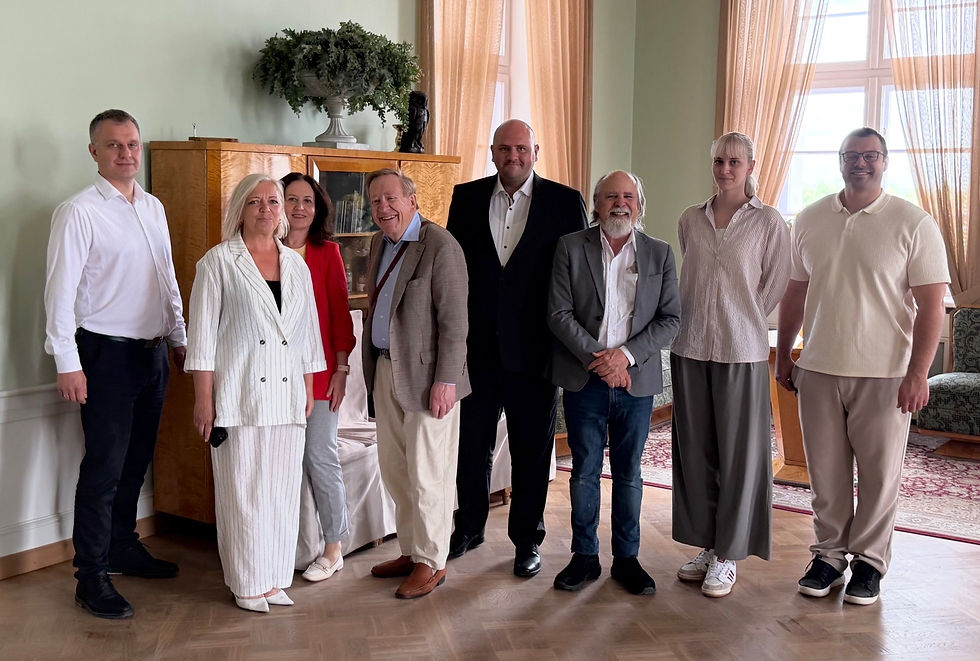
Mehaffy is the former Director of Education at The King’s Foundation, and his former colleague, Foundation Senior Director Ben Bolgar, will give a keynote at this year’s conference with an update on the King’s work and that of his Foundation on creating and sustaining healthy, durable and beautiful cities, towns and countrysides.
In addition, urban scholars from leading universities around the globe will participate, sharing the latest research on urban health, affordability, mobility, and opportunity for all.
Urgent Issues - and an Important Gathering
This year’s IMCL conference comes at a pivotal moment for cities around the world. Communities everywhere are confronting converging crises of housing affordability, climate vulnerability, declining public health, social fragmentation, infrastructure costs, and economic uncertainty. Yet amid these challenges, a growing body of research and practical experience is revealing new pathways forward — and many of the most promising lessons are emerging from the design and stewardship of more walkable, connected, resilient, and humane urban environments, in Europe and across the globe.

The Riga and Jelgava conference will bring together leading practitioners, scholars, public officials, developers, and civic leaders to explore actionable solutions to these urgent challenges. Sessions and workshops will address topics including housing affordability and “missing middle” development, urban health and social well-being, climate adaptation through urban form, mobility and public space design, heritage-led regeneration, and new implementation tools for livable urbanism.

Participants will examine how successful cities are translating ambitious goals into practical results, not only through technology and policy, but through the physical design and governance of neighborhoods, streets, public spaces, and civic institutions.
A major focus of the conference will be the growing recognition that urban form itself is a powerful public health tool, and also a climate mitigation tool. Researchers are increasingly documenting the links between walkable mixed-use neighborhoods and lower levels of isolation, chronic disease, stress, and automobile dependence, as well as lower greenhouse gas emissions. Sessions will explore how public spaces, human-scaled streets, green networks, and well-connected neighborhood structures can foster healthier and more socially resilient communities. This comes at a time when many cities are grappling with rising loneliness, mental health challenges, and declining civic trust.
Conference participants will also examine the accelerating global housing crisis and the barriers preventing many communities from delivering affordable, equitable, and durable housing. Discussions will focus on practical implementation strategies, including zoning reform, incremental development, adaptive reuse, mixed-income regeneration, and pattern-based approaches to creating more diverse and attainable housing options. Speakers will highlight successful case studies from Europe, North America, and elsewhere that demonstrate how cities can grow more affordably without sacrificing beauty, sustainability, or quality of life.
Another key theme will be the role of urban heritage and traditional urban patterns as sources of long-term resilience and adaptive intelligence. In a city like Riga — internationally renowned for its extraordinary architectural and urban heritage — participants will explore how historic urban fabrics embody generations of accumulated knowledge about climate adaptation, walkability, public life, craftsmanship, and human well-being. Rather than treating heritage merely as something to preserve nostalgically, the conference will examine how older urban patterns can provide the "DNA of place" to inform successful contemporary solutions for sustainable growth and regeneration.
The conference will also explore emerging technologies and their implications for humane urban development, including the growing use of artificial intelligence and digital tools in planning and design. Participants will discuss both the opportunities and risks of increasingly data-driven urban systems, and the continuing importance of human judgment, local knowledge, civic participation, and place-based design intelligence in shaping successful cities.
In addition to keynote presentations and research sessions, attendees will participate in study tours in Riga and hands-on workshops in Jelgava, engaging directly with local leaders and urban practitioners. Workshops will focus on implementable strategies for improving public spaces, retrofitting existing urban districts, strengthening climate resilience, and translating broad urban goals into workable local policies and codes.
For professionals concerned about the future of cities, the IMCL conference offers a unique opportunity — not only to learn about the latest research and best practices, but to engage directly with an international network of leaders working on the front lines of urban transformation. As with all IMCL conferences, participants will leave with practical tools, implementable strategies, new professional partnerships, and renewed inspiration for addressing the defining urban challenges of our time. In an era when many global urban goals remain stalled at the level of rhetoric, the 63rd IMCL will focus squarely on the urgent question facing cities everywhere: how do we actually deliver more livable, resilient, healthy, and beautiful urban places for all?
---
For more information or to register, visit https://www.imcl.online/latvia.

ABOVE: Excellent restaurants, gathering spots and night life in Riga.
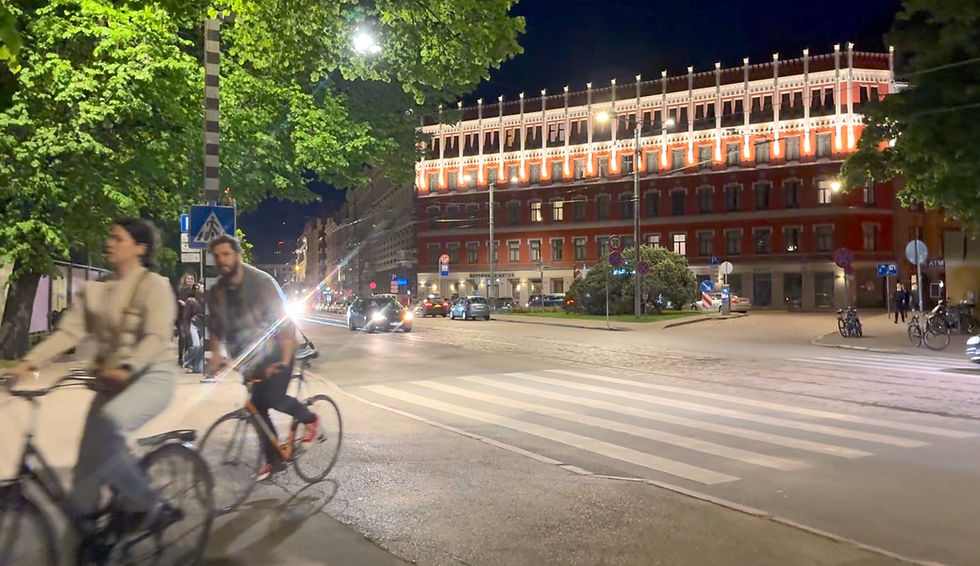
ABOVE: The Radisson Old Town Riga Hotel, our base for the first two days of the conference.

ABOVE AND BELOW: Riga features abundant parks and waterways.


ABOVE: Jim Brainard plans out the study tour of Riga with one of our guides.

ABOVE: One of Mikhail Eisenstein's celebrated Art Nouveau buildings. Riga has the largest collection of Art Nouveau buildings in the world, with over 800 buildings - a UNESCO World Heritage Site.

ABOVE: The Central Market from the boat tour — Europe's largest indoor market, with over 3,000 stalls in 72,000 square meters (778,000 square feet) of space.
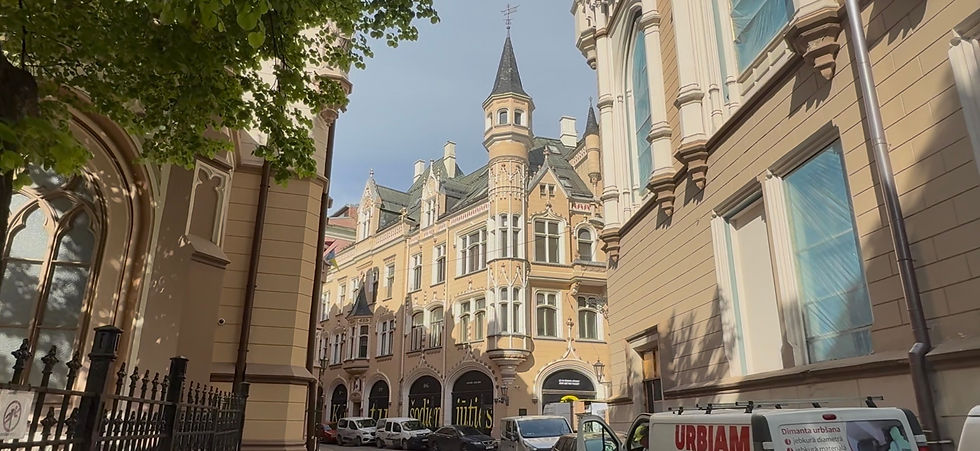
ABOVE: Riga's remarkable urban fabric.

ABOVE AND BELOW: Excellent Latvian food and music will be available to enjoy — in this case, at the remarkable Ala Pagrabs Restaurant and Folk Club.


ABOVE: Jim Brainard admires the St. Simeon and St. Anna Orthodox Cathedral in Jelgava, built in 1892.

ABOVE: The Jelgava History and Art Museum of Ģederts Eliass, where we will hold an optional Awards Dinner. The building dates from 1773.


